

This page was translated from Dutch with AI.
Optimising meetings and shortening decision-making cycles
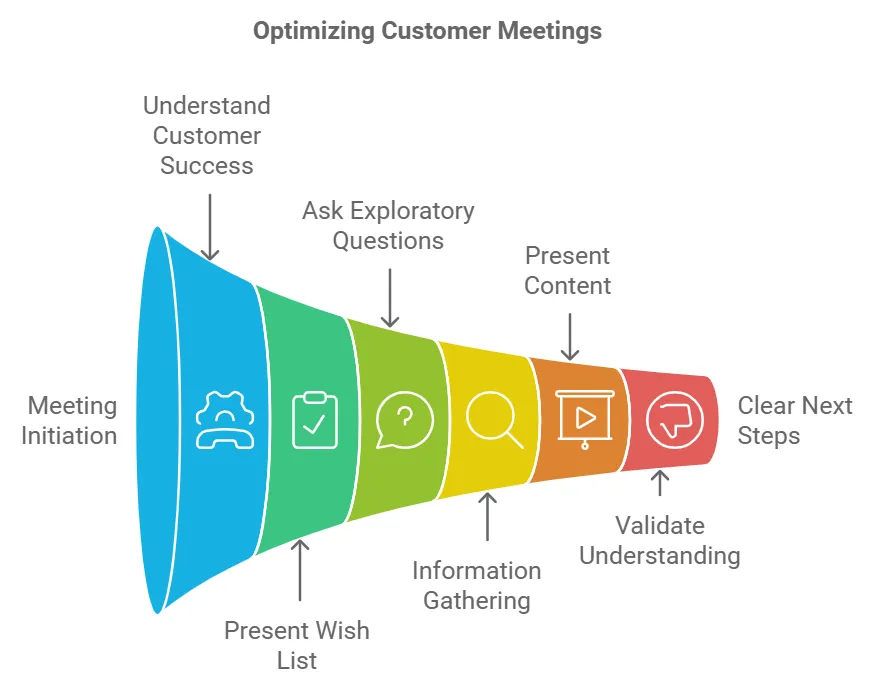
Short answer: You shorten decision-making cycles by taking a structured approach to a meeting with a potential client: establish rules and expectations, share your wish list, explore with open questions, present your content, validate and close affirmatively. This way, both parties leave with a clear understanding of each other's needs.
How do you conduct a productive meeting with a potential client?
With clear rules and expectations, active listening and a joint dialogue, you create an environment that promotes mutual understanding. This paves the way for successful results.
1. Rules and expectations
Start the meeting with the rules and expectations. That creates a framework for the discussion and ensures both parties are on the same page about the objectives.
Invite the client to share what would make the meeting a success for him or her. This shows that you value his or her input and you tailor the conversation to the needs.
For example, ask: "What needs to happen in this meeting to have a good feeling within the time we have?"
2. Present your wish list
Once you have understood the client's goals, share your own wish list. This way you express your priorities and align them with the client's expectations.
For example, add what makes the meeting a success for you, such as insight into the decision-making process or into the values.
3. Exploratory questions
Ask open exploratory questions to delve deeper into the client's needs. Follow each answer with three additional questions to listen actively and show genuine interest.
Use four types of questions for this:
- Questions for more information.
- Questions to make sure the content is aligned.
- Questions to clarify generalisations.
- Questions to gather information.
Keep asking questions and listening until you have enough information. This way you thoroughly understand the client's perspective.
4. Present your content
Once you have enough insights, present your content. Make sure your message is relevant to the client's needs and connects with what you heard.
5. Validate with questions
Ask validating questions to confirm that your message is getting across. This step is crucial to know that your points are understood and appreciated. For example:
- Does this make sense to you?
- If you had to explain this to a colleague, what would you say?
- What resonates most in what I just said?
Repeat the cycle of questioning, presenting and validating until all relevant topics have been covered. This iterative process promotes a comprehensive understanding of the client's requirements.
6. Affirmative conclusion
Close the meeting with affirmative language to outline the next steps and actions. That reinforces a positive tone and creates clear expectations for the follow-up.
For example, say: "Let's take our diaries and see when we can take things to the next level."
This is how you apply it
- Establish rules and expectations and let the client name his or her success criterion.
- Share your own wish list.
- Explore with open questions and three follow-up questions per answer.
- Present your content and validate it with a question.
- Close with the next steps.
With this structured approach, both parties leave with a clear understanding of each other's needs, values and the next steps. Have fun! You can practise more in our training courses Leading meetings and workshops effectively and Sales conversations.
About the author
Hans Demeyer is a serial entrepreneur and purveyor of optimism and inspiration. He immersed himself in psychology and change management and supports individuals and organisations with that knowledge.
Frequently asked questions
Start with the rules and expectations. That creates a framework and ensures both parties are on the same page. Ask the client what would make the meeting a success for him or her and then share your own wish list.
Ask open questions and follow each answer with three additional questions: to get more information, to check if the content is aligned and to clarify generalisations. This way you listen actively and show genuine interest.
In our Sales conversations training course, you put this into practice. Do you want it for your team or tailored to your needs? Then get in touch via the contact page, and together we will see what fits.